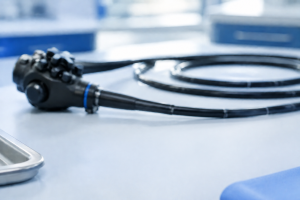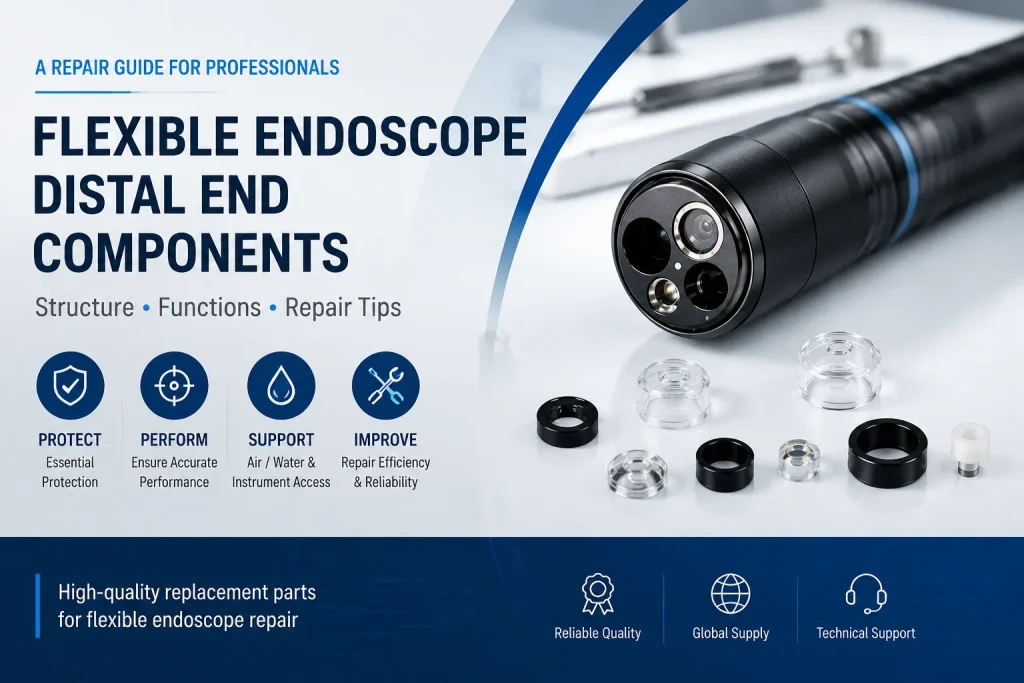
The distal end is one of the most critical areas of a flexible endoscope, integrating multiple functional components that support imaging, illumination, air/water delivery, and instrument operation. During regular use, distal components may experience wear, damage, or performance issues, making proper inspection and replacement essential for efficient endoscope maintenance.
For repair companies and medical equipment service providers, understanding the structure and function of flexible endoscope distal end components helps improve repair accuracy, reduce maintenance time, and ensure the correct replacement parts are selected.
What Are Flexible Endoscope Distal End Components?
Flexible endoscope distal end components are the specialized parts installed at the front tip of an endoscope that support imaging, illumination, fluid control, and instrument functions.
The distal end is the section that directly enters the examination area and contains several important elements working together. Although the distal structure is compact, it combines mechanical, optical, and fluid-related components.
Common distal end components include:
- Distal cover
- Front cover
- Lens protection components
- Light guide components
- Air/water outlet parts
- Biopsy channel opening components
- Related sealing and connection parts
These components must maintain accurate positioning and reliable sealing because even small damage may affect the operation and repair process of the flexible endoscope.
Main Components Located at the Distal End of a Flexible Endoscope
The distal end contains multiple parts with different functions. Understanding each component helps maintenance teams identify problems and select suitable replacement parts.
| Component | Main Function |
|---|---|
| Distal Cover | Protects internal distal structures and maintains external protection |
| Lens Window | Protects the optical viewing area |
| Light Guide Components | Provides illumination during examination |
| Air/Water Outlet | Delivers air and water for cleaning and visibility |
| Biopsy Channel Opening | Allows passage of medical instruments |
| Sealing Components | Helps prevent leakage and maintain system integrity |
Distal Cover
The distal cover is one of the most common replacement components during flexible endoscope repair.
Its main functions include:
- Protecting internal structures at the front tip
- Maintaining the external shape of the distal section
- Supporting proper positioning of functional openings
- Helping maintain sealing performance
Because the distal cover is located at the front end of the scope, it may experience repeated contact, cleaning procedures, and mechanical stress over time.
Air/Water Outlet Components
Air and water systems are essential for maintaining a clear examination field.
The distal area usually includes:
- Air outlet
- Water outlet
- Related channel connections
When these components experience blockage, damage, or sealing problems, the endoscope may have issues such as:
- Poor cleaning performance
- Reduced visibility during procedures
- Leakage during testing
Biopsy Channel Opening Components
The biopsy channel allows instruments to pass through the endoscope.
The distal opening must maintain:
- Correct positioning
- Smooth instrument passage
- Proper connection with internal channels
During repair procedures, technicians need to confirm that replacement components match the required structure and specifications.
Common Problems With Flexible Endoscope Distal Components
Most distal component problems are related to physical damage, sealing issues, or long-term operational wear. Early identification helps repair teams prevent further damage and improve maintenance efficiency.
1. Damaged Distal Cover
A damaged distal cover is one of the most common issues found during endoscope inspection.
Possible causes include:
- Repeated clinical use
- Mechanical impact
- Long-term cleaning processes
- Normal component aging
Common signs:
- Visible cracks
- Surface damage
- Abnormal external shape
- Leakage detected during testing
When damage is identified, replacement of the related distal component may be required.
2. Leakage Around the Distal Area
Leakage problems often indicate issues with:
- Sealing components
- Distal connections
- Damaged covers
- Channel-related parts
For repair technicians, leakage testing is an important step to determine whether distal components require replacement.
3. Air or Water Delivery Problems
The air/water system depends on accurate connection between internal channels and distal outlets.
Possible symptoms include:
- Weak water flow
- Incorrect air delivery
- Blocked outlet
- Reduced cleaning performance
Inspection should focus on both the distal component condition and the related channel system.
4. Physical Deformation or Wear
Because the distal end is exposed during procedures, physical deformation may occur over time.
Signs include:
- Irregular shape
- Misaligned openings
- Reduced functional performance
Regular inspection helps identify these problems before they affect the entire repair process.
When Should Flexible Endoscope Distal Components Be Replaced?
Flexible endoscope distal components should be replaced when visible damage, leakage, functional problems, or structural issues affect normal operation or repair quality.
Common replacement situations include:
Visible Physical Damage
Replacement may be required when technicians find:
- Cracks
- Broken surfaces
- Damaged protective structures
Failed Leakage Testing
If the distal area does not pass inspection, technicians should check:
- Sealing conditions
- Connection points
- Related components
Reduced Functional Performance
Replacement may be considered when:
- Air/water delivery is unstable
- Instrument access is affected
- Distal functions are not operating correctly
During Scheduled Repair and Maintenance
Some repair companies replace specific distal components during planned maintenance to improve repair efficiency and reduce future downtime.
How to Select the Correct Flexible Endoscope Distal Parts?
Selecting the correct distal component requires checking the endoscope structure, component specifications, and application requirements rather than relying only on appearance.
Important selection factors include:
1. Confirm the Endoscope Application
Different flexible endoscopes may require different distal structures.
Common applications include:
- Gastroscope
- Colonoscope
- Bronchoscope
- Other flexible inspection systems
2. Check Component Specifications
Before ordering replacement parts, repair teams should confirm:
- Component dimensions
- Connection structure
- Installation requirements
- Compatible endoscope specifications
Accurate information helps avoid incorrect part selection.
3. Consider Supply Capability
For repair businesses, a reliable parts supplier should provide:
- Clear product information
- Stable supply capability
- Fast communication
- Professional technical support
These factors help maintenance companies manage repair projects more efficiently.
Flexible Endoscope Distal Components for Professional Repair Applications
Endopart provides flexible endoscope repair components designed for professional maintenance applications, including distal-related replacement parts, covers, valves, and other repair accessories.
For repair companies and distributors, having access to reliable flexible endoscope distal end components helps improve repair workflow and maintain inventory availability.
Related product categories:
- Flexible Endoscope Distal Components
- Endoscope Front Cover Parts
- Endoscope Repair Accessories
Frequently Asked Questions
What are flexible endoscope distal end components?
Flexible endoscope distal end components are parts located at the front tip of a flexible endoscope that support imaging, illumination, air/water functions, and instrument operation.
Why do distal components need replacement?
Distal components may require replacement due to physical damage, leakage issues, wear, or reduced functional performance during endoscope operation.
How can repair companies identify the correct distal component?
Repair companies should confirm the endoscope application, component specifications, structural details, and supplier information before selecting replacement parts.
Are distal components important for endoscope repair?
Yes. Distal components directly affect important functions including visualization, fluid delivery, and instrument operation, making them an important part of flexible endoscope maintenance.
Conclusion
Flexible endoscope distal end components play an essential role in maintaining the performance and reliability of flexible endoscopes. From distal covers and air/water outlets to channel-related components, each part contributes to the overall function of the distal structure.
For repair companies and maintenance providers, understanding component functions, common failure conditions, and selection requirements can improve repair efficiency and reduce unnecessary delays.
By building a reliable supply chain for flexible endoscope distal end components, repair professionals can better support ongoing maintenance needs and provide efficient service for medical equipment users.