The bending rubber is one of the most frequently replaced external components in a flexible endoscope. Although it appears to be a simple protective sleeve, selecting the wrong bending rubber can lead to reduced durability, compromised waterproofing, restricted angulation, and premature repair failures. For repair centers and biomedical technicians, accurately identifying and ordering the correct bending rubber is essential to ensuring reliable endoscope performance after repair.
This guide explains how bending rubbers function, why they fail, how to measure them correctly, and what information suppliers need to provide the right replacement part.
What Is a Bending Rubber?
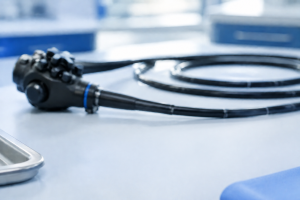
A bending rubber is the flexible outer covering located at the distal bending section of a flexible endoscope. It covers and protects the articulation mechanism while allowing the insertion tube to bend freely during procedures.
Its primary functions include:
- Protecting internal bending components
- Preventing fluid ingress
- Maintaining flexibility during angulation
- Shielding control wires and internal channels
- Reducing wear caused by repeated movement
Because the bending section experiences continuous movement during every procedure, the bending rubber is subjected to significantly more stress than most other external components.
Why Is the Bending Rubber So Important?
Many technicians focus on major internal repairs while overlooking the condition of the bending rubber. However, a damaged bending rubber can quickly lead to more serious failures.
Potential consequences include:
| Issue | Potential Result |
|---|---|
| Cracks or tears | Fluid penetration |
| Loose attachment | Leakage during procedures |
| Material hardening | Reduced flexibility |
| Surface damage | Increased contamination risk |
| Improper sizing | Restricted angulation |
Even a small defect can eventually allow moisture to enter the bending section, potentially damaging expensive internal components.
For this reason, many repair facilities replace the bending rubber whenever major distal-end repairs are performed.
Common Causes of Bending Rubber Failure
Understanding why bending rubbers fail helps repair teams identify replacement needs before more extensive damage occurs.
1. Normal Aging
Bending rubbers are consumable components.
Over time, repeated flexing causes:
- Material fatigue
- Loss of elasticity
- Surface hardening
- Reduced waterproof performance
The frequency of use directly affects service life. Endoscopes used in high-volume hospitals typically require more frequent replacement than those used in smaller facilities.
2. Excessive Angulation Stress
Every procedure requires repeated bending of the distal section.
Continuous extreme angulation can cause:
- Micro-cracks
- Material stretching
- Delamination
- Early wear around attachment points
Scopes used in difficult procedures often experience accelerated bending rubber deterioration.
3. Chemical Exposure
Flexible endoscopes undergo frequent cleaning and disinfection.
Exposure to:
- Harsh detergents
- High-level disinfectants
- Improper cleaning chemicals
may gradually degrade rubber materials and shorten their lifespan.
Repair centers often discover that chemical damage creates surface discoloration before structural failure becomes visible.
4. Physical Damage During Handling
Transportation and improper storage are common causes of accidental damage.
Examples include:
- Impact during shipping
- Crushing during storage
- Contact with sharp tools
- Improper packaging
External damage can compromise waterproof integrity even when the internal bending mechanism remains functional.
5. Poor Previous Repairs
Incorrect installation techniques may significantly reduce service life.
Common mistakes include:
- Improper adhesive application
- Incorrect curing procedures
- Using incompatible replacement parts
- Incorrect positioning
A high-quality bending rubber installed incorrectly can fail prematurely.
Signs That a Bending Rubber Needs Replacement
Technicians should inspect bending rubbers regularly for the following warning signs:
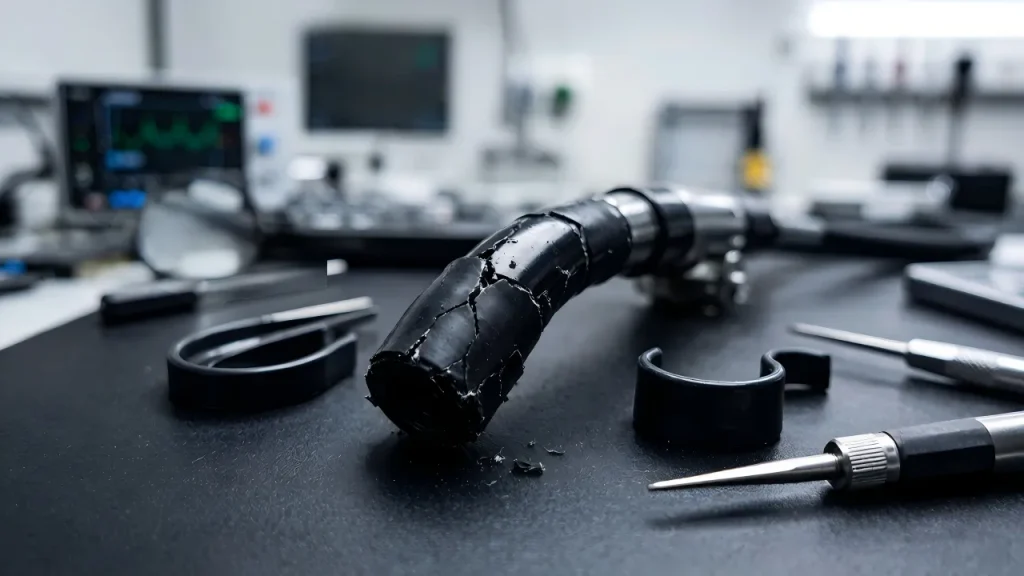
Visible Cracks
Small cracks are often the first indication of aging.
Even minor cracking can allow fluid penetration during use.
Surface Peeling
Peeling or separation of material layers may indicate advanced deterioration.
Replacement should not be delayed once peeling begins.
Discoloration
Changes in color may suggest:
- Chemical degradation
- UV exposure
- Material aging
While discoloration alone does not always require replacement, it often precedes more serious damage.
Reduced Flexibility
If the bending section feels stiff during manipulation, the rubber may have hardened due to age or chemical exposure.
Leakage Test Failure
A failed leak test frequently indicates damage that may not be immediately visible.
Leak testing should always be performed before and after repair procedures.
How to Measure Endoscope Bending Rubber Correctly
One of the most common ordering mistakes is relying solely on visual appearance.
Many bending rubbers look similar but have different dimensions and compatibility requirements.
Measure the Length
Measure the overall length of the bending rubber from attachment point to attachment point.
Even small variations can affect installation.
Measure the Diameter
Record both:
- Proximal diameter
- Distal diameter
Different endoscope models often require specific diameter combinations.
Check Wall Thickness
Wall thickness influences:
- Flexibility
- Durability
- Angulation performance
Using a thicker or thinner alternative may negatively affect scope performance.
Verify Model Compatibility
Whenever possible, confirm:
- Endoscope brand
- Endoscope model
- OEM part number
- Existing component dimensions
Providing complete information greatly reduces ordering errors.
Information Suppliers Need Before Quoting
To receive the correct bending rubber, suppliers typically require:
Endoscope Brand
Examples:
- Olympus
- Pentax
- Fujifilm
Scope Model Number
Examples:
- GIF Series
- CF Series
- EG Series
- EC Series
The exact model is often more important than the brand alone.
Photos of Existing Component
Clear photographs can help suppliers verify:
- Shape
- Attachment style
- Dimensions
- Compatibility
Existing Part Number
If available, part numbers provide the most reliable identification method.
Common Mistakes When Ordering Replacement Bending Rubber
Many repair delays occur because of avoidable ordering errors.
Ordering by Appearance Only
Visually similar parts are often not interchangeable.
Ignoring Model Variations
Different versions of the same scope family may use different bending rubbers.
Choosing Lowest-Cost Options
Low-quality materials may:
- Wear faster
- Crack earlier
- Affect waterproof performance
Reliability is often more important than minimal cost savings.
Skipping Measurements
Assumptions frequently lead to incorrect orders.
Always verify dimensions before purchasing.
Repair or Replace: When Is Replacement Necessary?
In most cases, bending rubbers cannot be effectively repaired once structural damage occurs.
The following guideline is commonly used:
| Condition | Recommended Action |
|---|---|
| Surface contamination | Clean |
| Minor cosmetic marks | Monitor |
| Small cracks | Replace |
| Peeling material | Replace |
| Leak test failure | Replace |
| Severe aging | Replace |
Attempting temporary repairs often increases long-term maintenance costs.
Best Practices for Extending Bending Rubber Life
Repair facilities can improve service life by following several preventative measures.
Perform Routine Visual Inspections
Early detection reduces the risk of major failures.
Follow Proper Cleaning Procedures
Always use manufacturer-approved cleaning agents.
Avoid Excessive Bending During Storage
Store endoscopes in recommended hanging positions whenever possible.
Use Protective Transportation Cases
Proper packaging minimizes accidental damage during shipping.
Conduct Regular Leak Testing
Leak testing remains one of the most effective methods for identifying early damage.
How Endopart Supports Endoscope Repair Centers
At Endopart, we supply a wide range of flexible endoscope repair parts, including bending rubbers compatible with many Olympus, Pentax, and Fujifilm models.
Our team can assist repair centers by:
- Verifying compatibility
- Identifying replacement parts from photos
- Providing dimensional confirmation
- Supporting repair part sourcing for multiple endoscope brands
Providing accurate scope information helps ensure faster quotations and more reliable part selection.
Frequently Asked Questions
Can a cracked bending rubber be repaired?
Generally, replacement is recommended. Temporary repairs rarely restore long-term waterproof integrity.
Are Olympus and Pentax bending rubbers interchangeable?
Not usually. Most bending rubbers are designed for specific models and dimensions.
How long does a bending rubber last?
Service life varies depending on usage frequency, cleaning practices, and handling conditions. High-use scopes typically require more frequent replacement.
What information should I provide when ordering a bending rubber?
The most useful information includes the brand, model number, dimensions, photos, and part number if available.
Does replacing the bending rubber improve scope performance?
A properly installed replacement can restore flexibility, waterproof integrity, and reliable articulation performance.